
What Great British Railways Must Get Right
The creation of Great British Railways (GBR) marks a defining moment for the UK rail industry. After decades of fragmentation and complexity, the new body promises a simpler, more reliable railway focused on passengers and communities. But structural reform alone will not deliver change unless it also resets priorities.
Travel patterns have shifted, public finances are under pressure, and the assumptions that once shaped rail investment no longer hold. The success of GBR will depend not just on centralising control, but on learning from what already works across the network — particularly at a local level.
“There is a real risk that reform focuses on centralising the wrong things,” said a spokesperson for Pre Metro. “A more unified railway will not succeed if it continues to prioritise large, high-profile schemes over the everyday services most people rely on.”
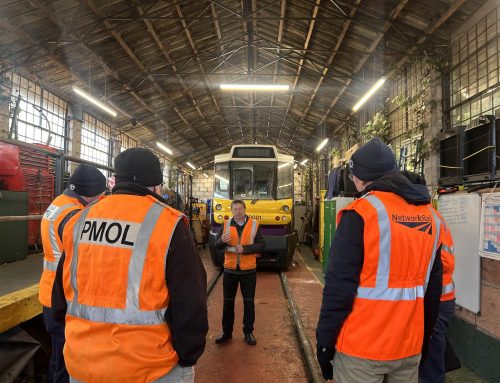
Across the UK, local rail services already demonstrate how rail can deliver trusted, everyday value. The Stourbridge Shuttle is a clear example: a frequent, reliable service embedded in daily life, connecting a town centre directly to the national network at a fraction of the cost of major infrastructure projects. Its success is not unique — it is replicable.
These services work because they are designed around real journeys. Reliability, frequency, simplicity, and local alignment consistently matter more to passengers than headline speed or scale. Yet too often, such outcomes are undervalued in national appraisal and funding frameworks.
GBR has an opportunity to change this. By focusing on outcomes over optics, empowering local delivery, and treating proven local success as a benchmark rather than an exception, the new organisation can build a railway that serves the whole country — not just its main corridors.
Very Light Rail and right-sized local solutions have a key role to play, offering affordable, adaptable ways to improve connectivity while supporting decarbonisation and local growth.
The evidence is already there. The challenge for Great British Railways is not inventing new ideas, but scaling what works. If reform is to be truly transformational, local success must move from the margins to the mainstream — and become the foundation of a national rail strategy built around people, not just plans.