Stop Talking About Innovation, Start Learning From It
This article was recently featured TAUT Magazine
The Government’s newly established Mass Transit Taskforce has been given an ambitious challenge: identify how Britain can deliver mass transit systems more quickly, more efficiently and at lower cost.
Its remit extends beyond traditional tramways and metro systems to include emerging technologies such as Very Light Rail (VLR), with a focus on removing the barriers that prevent schemes from progressing from concept to reality.
That raises an important question. While much of the debate centres on future innovation, are we making enough use of the evidence that already exists?
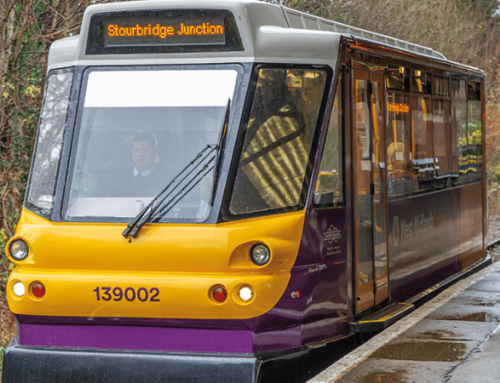
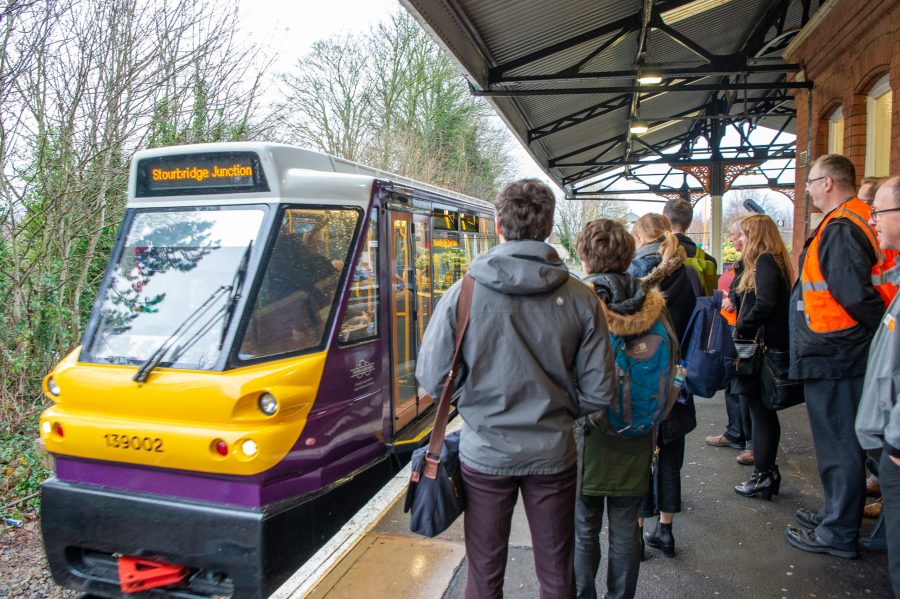
For more than 17 years, the Stourbridge Shuttle has quietly demonstrated what Very Light Rail can achieve. Operating every day between Stourbridge Junction and Stourbridge Town, it remains the UK’s only operational Very Light Rail service, providing a reliable, high-frequency rail link using lightweight railcars at significantly lower operating costs than a conventional heavy rail service.
Unlike many transport proposals, the Shuttle is a mature public transport operation supported by nearly two decades of real-world operational experience.
That experience matters.
Every journey undertaken has generated evidence covering passenger demand, fleet performance, maintenance requirements, reliability, infrastructure needs, operational resilience and customer acceptance.
These are precisely the kinds of practical insights that transport planners often seek when developing new projects, yet they cannot be replicated through modelling or feasibility studies alone.
The Taskforce has been asked to examine planning, funding, procurement, governance and delivery across all forms of mass transit. Rather than asking whether Very Light Rail can work, policymakers now have the opportunity to ask more valuable questions.
What has already been proven?
Which lessons can be applied elsewhere?
And what barriers remain despite a technology already operating successfully?
The answers extend well beyond a single branch line.
Operational experience from Stourbridge provides valuable evidence on realistic operating costs, service frequency, maintenance regimes, depot requirements, vehicle reliability, integration with the wider railway and the practical introduction of innovative technology into everyday passenger service.
These are lessons that only an operational railway can provide.
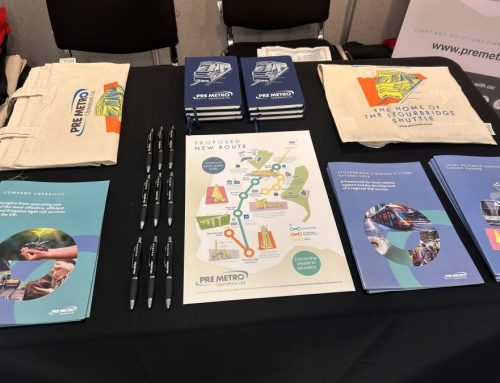
They also form the foundation for future schemes. Proposals such as the Dudley Dasher seek to build directly upon the experience gained in Stourbridge, applying proven operating principles to deliver affordable, scalable rail connectivity in areas where conventional light rail may prove financially challenging.
That represents an important shift in thinking. Rather than beginning with a blank sheet of paper, future Very Light Rail schemes can start with seventeen years of operational knowledge.
The Mass Transit Taskforce therefore has an opportunity to do more than recommend new funding mechanisms or streamline planning procedures. It can recognise that Britain already possesses a successful, operational example of innovative mass transit and ensure those lessons influence future policy.
The definition of mass transit should fully recognise Very Light Rail alongside conventional tram and metro systems. Different places require different transport solutions, and policy should encourage authorities to select the technology that best meets local needs rather than defaulting to the largest and most expensive option.
Secondly, affordable and scalable transport solutions should be considered from the outset of every rail reopening, regeneration and urban transport project. The approval process also requires greater proportionality.
A £30 million Very Light Rail scheme should not be expected to navigate the same level of bureaucracy as a multi-billion-pound metro project.
Simpler governance and procurement arrangements would allow smaller authorities to deliver practical improvements with greater confidence.
The evidence already exists.
If the Mass Transit Taskforce is serious about delivering better public transport faster, more affordably and to more communities, it should not simply ask what the future of mass transit might look like.
It should begin by learning from what Britain has already proved can work.